



Lyocell Fabric

Lyocell is a semi-synthetic fabric that is commonly used as a substitute for cotton or silk. This fabric is a form of rayon, and it is composed primarily of cellulose derived from wood.
What Is Lyocell Fabric?
Originally developed by American Enka in 1972, lyocell burst into popularity in the latter decades of the 20th century, and it is still relatively popular around the world. Since it is primarily made from organic ingredients, this fabric is seen as a more sustainable alternative to fully synthetic fibers like polyester, but whether or not lyocell fabric is truly better for the environment is questionable.

H&M Long Lyocell Shirt – Blue
At American Enka, lyocell fabric only made it through the pilot phase of development before the project was abandoned. It wasn’t until the 1980s that a British company called Courtaulds Fibres picked up the pieces and created a new fabric called Tencel based on lyocell research. These two fabrics are chemically identical, and the terms Tencel and lyocell can be used interchangeably.
Consumers generally find lyocell fabric to be soft to the touch, and many people can’t tell the difference between this fabric and cotton. Lyocell fabric is very strong whether it is wet or dry, and it is more resistant to pilling than cotton. Textile manufacturers like the fact that it’s easy to mix this fabric with other types of textiles; for instance, it plays well with cotton, silk, rayon, polyester, nylon, and wool.
How Is Lyocell Fabric Made?

Tencel is almost chemically identical to rayon, but a somewhat different process is used to make this rayon derivative. Unlike the rayon production process, the lyocell fabric production process involves the use of a direct solvent instead of an indirect solvent. A solvent spinning technique is used to create Tencel, which means that unlike the case in the production of rayon, the Tencel production process doesn’t cause any significant chemical changes to the chemical structure of cellulose.
While fabrics derived from cellulose have been around for nearly 200 years, they have only been in mass production since the beginning of the 20th century. These fabrics were originally designed as substitutes for silk, and pioneers of cellulose fabrics attempted to recreate the process that silkworms use to make real silk.
The first cellulose fabric to be mass-produced was rayon, and to this day, rayon is made with an extrusion method. As one of the newest cellulose fabric production methods, production of lyocell improves on the production methods used to make rayon. It is more efficient, it produces less waste, and it results in a product that is less synthetic than rayon.
The Production Process
Chips of hardwood like oak or birch are used as the raw materials for the cellulose that is used in this fabric. The trees used for these purposes are usually grown on managed tree farms. Once the trees arrive at a Tencel production facility, they are broken down into chips and loaded into a vat of chemical digesters, which soften the chips into pulp.
This pulp is then washed in water, and bleach may also be used to sanitize it. Next, it is dried in a sheet, and it is rolled into spools. Most cellulose rolls are enormous and weigh about 500 pounds.
These sheets are then broken into squares measuring approximately one inch across, and these squares are placed in pressurized and heated vats of amine oxide, which is the primary solvent used to make lyocell fabric. Once the cellulose has dissolved into a clear liquid, it is filtered and pumped through spinnerets.
As it is forced through spinnerets, cellulose is turned into long, thin fibers. The resulting fibers are immersed in a vat of diluted amine oxide to set, and they are then washed with demineralized water.
The lyocell fibers are then dried, and a lubricant, such as silicone or soap, is applied. The fibers are now considered to be in a state called tow, and these bundles of tow are placed in a crimper that compresses the fiber. Next, they are carded, which separates and orders the strands. Lastly, the fibers are cut, and they are then ready to be turned into a variety of different products.
Compared to rayon, the Tencel production process requires far fewer steps and takes much less time. Also, since the amine oxide used to make this fabric can be recovered, making lyocell fabric is much less wasteful than making rayon.
How Is Lyocell Fabric Used?

Tencel is usually used as a substitute for cotton or silk. This fabric feels like soft cotton, and it is used to make everything from dress shirts to towels to underwear.
While some garments are made entirely from lyocell, it is more common to see this fabric mixed with other types of fabrics like cotton or polyester. Since Tencel is so strong, when it is mixed with other fabrics, the resulting composite fabric is stronger than cotton or polyester on its own.
In addition to garments, this fabric is used in a variety of commercial settings. For instance, many manufacturers have substituted lyocell for cotton in the fabric parts of conveyor belts; when belts are made with this fabric, they last longer, and they are more resistant to wear and tear.
Furthermore, Tencel is quickly becoming a favorite fabric for medical dressings. In life or death situations, having a fabric that is highly tensile is very important, and Tencel has proved itself to be stronger than fabrics that were used for medical dressings in the past. This fabric’s high absorbancy profile also makes it an ideal material to use in medical applications.

Tencel lyocell sheet
Soon after its development, scientific researchers recognized the potential of lyocell as a component in specialty papers. While you wouldn’t want to write on Tencel paper, many different types of filters are made primarily from paper, and since this fabric has low air resistance and high opacity , it is an ideal filtration material.
Since lyocell fabric is such a versatile substance, it may also be used in a variety of specialty applications. Research into this fabric is ongoing, which means that more uses for Tencel may be discovered in the future.
Where Is Lyocell Fabric Produced?

When lyocell fabric was first created, it was only produced at the American Enka factory in Enka, North Carolina. When Enka stopped producing this substance, however, production moved entirely to the United Kingdom when Courtaulds Fibers branded this fabric as Tencel.
Eventually, Tencel production expanded to the Courtaulds plant in Mobile, Alabama, and until the late 1990s, this fabric was not made anywhere else in the world. In 1998, however, Courtalds was sold to Akzo Nobel, which is a Dutch international corporation specializing in paints. Akzo Nobel went on to sell the rights to Tencel to a private equity firm named CVC partners, which promptly sold its Tencel division to Lenzing AG, which is an international textile corporation based in Austria.
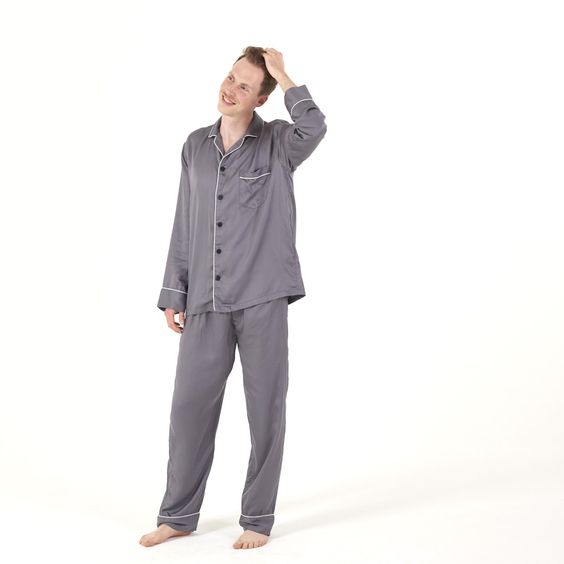
Bamboo Lyocell Pj Pants
While Lenzing AG has a variety of different factories in Europe, a great deal of their production has moved overseas to countries like China and Indonesia. While some Tencel is still produced in countries like Austria, the United Kingdom, and the USA, the majority of this fabric is now produced in China.
Since Lenzing now holds the Tencel patent, it remains the largest producer of this textile in the world. A variety of smaller companies may also make this fabric in minuscule quantities, but if you’ve worn a lyocell garment, chances are it was made by Lenzing AG in one of their Chinese factories.
How Much Does Lyocell Fabric Cost?
Rayon and other cellulose fabrics were originally produced as cheaper alternatives to silk. While silk production is all-natural and relatively sustainable, it’s hard to produce silk in large quantities, which prompted the birth of the “artificial silk” revolution that ultimately resulted in the development of modern rayon.
While it’s true that cellulose fabrics remain cheaper to produce than silk, the same can’t be said for cotton. While prices of cotton and cellulose fabrics fluctuate, cotton has been significantly cheaper to produce in the last decade or so. If global economic trends remain stable, cotton will remain less expensive than lyocell and similar fabrics from a production standpoint.

Organic Bamboo Lyocell fabric
However, the difference in price between cotton and Tencel is nearly negligible, and some manufacturers may prefer the process of producing cellulose fabrics to the process of manufacturing cotton. Lyocell, in particular, is one of the simplest cellulose fabrics to produce, and it generates very little waste.
Even if cellulose fabrics become less popular than cotton due to price fluctuations, lyocell fabric is much more useful than cotton in a number of applications. This textile’s tensility is off the charts, and it is highly durable in commercial applications. Manufacturers are more than happy to pay slightly higher prices for these benefits.
What Different Types of Lyocell Fabric Are There?

There is, from a chemical point of view, only one type of lyocell fabric. Even when this substance is called Tencel, it has the same chemical composition, and it is made using the same process.
However, there are a couple of fabrics that are very similar to lyocell fabric that you should be aware of as you learn more about this textile. Examples of these similar fabrics include:
-
- Viscose rayon: This fabric was the first type of cellulose textile to rise into popularity. Viscose rayon has been produced since the first few decades of the 20th century, and it was preceded by a number of cellulose fabric prototypes that were discontinued due to flammability or untenable production processes.
Viscose rayon remains a popular fabric, and it is produced around the world. However, the viscose production process is much more complicated than the process that is used to create lyocell, and it is much more impactful on the environment. In some cases, viscose rayon may be cheaper to produce than Tencel, but it’s clear that this fabric is technologically outdated.
- Modal rayon: This type of rayon is relatively similar to Tencel in a number of ways. It is made with a simpler process than viscose rayon, and it is significantly more tensile than other types of cellulose fiber. This rayon production method was discovered in the 1940s, and it represents a technical leap forward in cellulose fabric production. However, many manufacturers around the world still produce viscose rayon instead of modal rayon.
How Does Lyocell Fabric Impact the Environment?
Compared to other cellulose textiles, lyocell is much better for the environment. While the process of producing this fabric is similar to that which is used to make rayon and other cellulose fabrics, production of Tencel doesn’t introduce any toxins into the environment if it is done correctly.

Overall aus Lyocell
Unlike similar textiles, lyocell production employs a “closed loop” extraction process, which means that the same batch of amine oxide is used to extract multiple batches of Tencel. For comparison, production of viscose rayon involves a number of different chemical processes that do not employ a closed loop system, and these chemicals are then introduced into the environment in the form of contaminated water.
It is, however, important to remember that lyocell is made from trees, and a great deal of tree material is wasted in the production of this fabric. If trees for Tencel production are not grown sustainably, production of this material could have a negative environmental impact, and not all Tencel producers are guaranteed to follow the sustainable closed-loop extraction model.
Lyocell Certifications Available

Lyocell can be certified as organic under certain circumstances. To receive this certification, producers of this fabric must use organic practices to produce the trees that they use for cellulose, and they must avoid using certain toxic chemicals in the production process.
Unlike rayon, the structure of Tencel isn’t altered by any chemicals, which means that the cellulose-based fabric that is produced and labeled as Tencel is technically made solely from cellulose derived from trees. However, since amine oxide is used in the Tencel production process, some purists may not view this fabric as completely organic.
Other News
[bdp_post_carousel]